Histamine Intolerance
Histamine intolerance and MCAS in women: symptoms, causes, and what to do about it
When most people think of histamine, they think of hayfever. It turns up in a long list of symptoms that look nothing like allergies, and that is why so many women spend years being tested for everything else while nobody names histamine.
I have MCAS and histamine intolerance from breast implant illness, so this is not theory for me. My symptoms were extreme fatigue, brain fog bad enough that I was investigating early dementia, random rashes, itchy skin, and irritability that felt like PMS except it lasted all month. I know what it is like to eat a meal you have eaten a hundred times before and feel wrong an hour later, with no idea why.
The symptoms I see most often
The list below is what comes up in my clinic every week.
Itchy skin without a rash, and hives
Waking up with headaches
Brain fog, brain fatigue, and poor memory recall
Fatigue that feels heavy, different from not enough sleep or low iron
A heavy, puffy, inflamed feeling
Waking in the night, or sleep that stays light
Heart palpitations
Anxiety
Air hunger
Feeling irritable and annoyed
Skin going red where you touch or rub it, which is called dermographism
Eczema
Painful, heavy periods
Reflux, nausea, and loose bowels after eating
Dizziness on standing up quickly, and motion sickness
Most women arrive with six or seven of these and have been given a separate explanation for each one. The reflux gets a PPI, the anxiety gets a referral, the eczema gets a steroid cream, and nobody puts them together.
What histamine is doing in your body
Histamine is a normal signalling chemical, and you need it. It stimulates stomach acid production so you can break down protein, keeps you awake and alert through H1 receptors in the brain, and it is part of the immune response that brings blood flow to an area after an injury or infection. That is why the tissue around a bee sting goes red, hot and swollen.
Symptoms begin when the total amount of histamine in your system is greater than your enzymes can clear. The load comes in from several directions at once (your own mast cells, the food you eat, the bacteria in your gut, your hormones), so a single trigger food is rarely the whole story, which is why women get so confused when a food is fine one week and a problem the next.
Mast cells, and why they degranulate

Mast cells are immune cells that hold histamine in granules inside them, concentrated in the gut lining, skin, sinuses, lungs, and around nerve endings and blood vessels. When they are activated they degranulate, releasing histamine along with tryptase, prostaglandins, leukotrienes and cytokines into the surrounding tissue.
The list of triggers is long, and food is only part of it:
Infection, particularly viral illness, and post-viral states including long COVID
Mould exposure and water-damaged buildings
Alcohol
Heat, hot showers, saunas, and hot weather
Intense exercise
Physical trauma, surgery, and foreign material in the body, which is where breast implants came into it for me
Medications including NSAIDs, opioids, some antibiotics, contrast dyes, and a few antidepressants
Stress hormones (more on this below)
Oestrogen
Chemical exposure through fragrance, cleaning products, and pesticide residue
Mast cell activation syndrome (MCAS) is where those cells are inappropriately reactive across multiple body systems. Diagnosis uses serum tryptase taken at baseline and during a flare, urinary histamine metabolites, and a documented response to mast cell treatment. What I treat is the contributing factors underneath: the gut, the liver, the nervous system, nutrient status, and hormones.
Clearance: DAO and HNMT
You have two enzymes that break histamine down, and both need to be working.
DAO (diamine oxidase)is produced in the lining of your small intestine and clears histamine from food before it reaches circulation. It needs vitamin B6, copper and vitamin C to function, so nutrient depletion alone will slow you down. DAO production is reduced by:
Gut inflammation and damage to the intestinal lining
SIBO and dysbiosis
Coeliac disease and inflammatory bowel disease
Regular alcohol
NSAIDs, some antidepressants, and metformin
Genetic variation in the AOC1 gene
HNMT (histamine N-methyltransferase)clears histamine already inside your cells and tissues, and it works through methylation, which requires B12, folate, B6 and magnesium. Women with an MTHFR variation and poor methylation status often clear histamine slowly for this reason, and the liver is handling this while also processing oestrogen, alcohol, paracetamol and everything else through Phase 1 and Phase 2 detoxification. A liver under that much demand leaves both histamine and oestrogen in circulation for longer.
Your gut is producing histamine too
Certain bacteria manufacture histamine from the amino acid histidine in your food, so an overgrowth of histamine-producing species will raise your total load with no change to your diet at all. This is common in SIBO, and it is one of the reasons women who eat a low histamine diet get partial relief and then stall.
An inflamed or permeable gut lining also produces less DAO, so damage to the small intestine reduces your ability to clear the histamine you eat. Coeliac disease, gastroenteritis, food poisoning, courses of antibiotics, chronic constipation and low stomach acid all contribute here. Treating the gut is not optional here, because the small intestine is where most of your DAO is produced.
The nervous system connection

Mast cells carry receptors for stress hormones including CRH (corticotropin releasing hormone) and substance P, and they sit right up against nerve endings in the gut and skin. Sympathetic nervous system activation causes them to degranulate with no food and no allergen involved.
This is the part women find the most validating, because after a couple of weeks of extra early starts, skipping breakfast, being super busy with no time to rest, dealing with worry or anxiety, and crappy sleep, you can start to see some of these symptoms with no change to your diet at all. The relationship goes both ways: histamine acts on the brain as an excitatory neurotransmitter, which produces the anxiety, the palpitations, the air hunger and the 3am waking, and that state activates more mast cells.
Oestrogen, progesterone, and why your symptoms track your cycle
Oestrogen signals mast cells to release histamine, and histamine signals the ovaries to produce more oestrogen, so the two amplify each other through a feedback loop. Progesterone is what raises DAO, so how much histamine you can clear changes across the month.
Oestrogen peaks at ovulation, and progesterone is low in the final week of your cycle, which is when the headaches, hives, insomnia and irritability arrive for most of the women I work with. Oestrogen dominance makes all of it worse, and perimenopause makes it worse again, because progesterone declines first while oestrogen fluctuates unpredictably. Women who have been told they have histamine intolerance frequently have unaddressed oestrogen dominance underneath it, and women with severe PMS or PMDD often have histamine amplifying their hormonal symptoms.
High histamine foods

Histamine accumulates in food as it ages, ferments, or sits in the fridge. The main offenders:
Aged cheeses: parmesan, cheddar, blue, brie, camembert
Cured and smoked meats: salami, prosciutto, bacon, ham, chorizo
Tinned fish and smoked fish: tuna, sardines, anchovies, mackerel, smoked salmon
Any fish or seafood that has not been frozen immediately after catching
Fermented foods: sauerkraut, kimchi, kombucha, kefir, yoghurt, miso, tempeh, soy sauce, tamari, fish sauce
Vinegar and anything pickled
Alcohol, particularly red wine, champagne, beer and cider
Leftovers older than 24 hours, and slow-cooked meat held warm for hours
Tomato, spinach, eggplant, avocado
Dried fruit: sultanas, apricots, prunes, figs
Bone broth and long-simmered stocks
Yeast extract (Vegemite), and yeasted breads to a lesser degree
Histamine liberating foods

These contain little histamine themselves, and they prompt your own mast cells to release more.
Citrus: orange, lemon, lime, grapefruit
Strawberries, kiwifruit, pineapple, papaya, banana
Tomato (both a source and a liberator)
Chocolate and cocoa
Nuts, particularly walnuts, cashews and peanuts
Shellfish
Raw egg white
Additives: benzoates, sulphites, nitrites, MSG, artificial colours including tartrazine
Alcohol again, which liberates histamine, contains it, and blocks DAO all at once
Black tea, green tea, mate and energy drinks also inhibit DAO, so they belong in the same category for anyone with a heavy symptom load.
The low histamine diet as a tool to get symptoms under control and prevent flares
Starting with a low histamine diet, and how long you stay on it
I start every woman on it for 3 weeks to see which symptoms improve, because that answer tells me how much of her presentation is histamine and how much is something else going on.
How long you stay on it after that depends on you. Some women need a lower histamine way of eating permanently, particularly where there is genetic variation in AOC1 (the gene that codes for DAO), in HNMT, or in the methylation genes including MTHFR, since those women produce less enzyme than everyone else and no amount of gut treatment changes their genetics. For most women, treating the reasons clearance is poor (the gut lining, SIBO, the liver, oestrogen, nutrient status and nervous system load) means foods come back in and stay in.
Eating this way long term is far less restrictive than women expect, since almost every vegetable is fine, most fruit is fine, and meat, fish, eggs, rice, oats and legumes all stay in, so fibre and plant variety hold up well. What you lose is fermented food, which is one of the better sources of live microbes, along with a short list of otherwise excellent plants including tomato, spinach, avocado, citrus, strawberries and walnuts, plus the effort of planning meals around what has been in the fridge and for how long. So I treat the clearance side while you are eating this way, then reintroduce one food at a time, and even the women who stay lower histamine for life usually end up eating a far wider list than they did in those first three weeks.
The foods I build the reintroduction around: freshly cooked meat and poultry, fish frozen at sea, eggs, rice, oats, quinoa, broccoli, zucchini, carrot, sweet potato, pumpkin, cucumber, leek, onion, garlic, apple, pear, blueberries, mango, extra virgin olive oil, coconut, and fresh herbs. Cook, cool quickly, and freeze in portions rather than keeping leftovers in the fridge for three days.
Foods worth building your meals around
Two nutrients earn a place on the shopping list while you are eating this way. Quercetin stabilises mast cells so they release less histamine in the first place, and vitamin C works as a cofactor for DAO while also degrading histamine directly. Food will not deliver these at the dose a supplement does, and the amounts in a normal week of eating still contribute, so this is where I point women who want to do something practical beyond avoiding the trigger foods.
Quercetin-rich foods:red onion, brown onion, shallots, apple with the skin left on, blueberries, red grapes, broccoli, kale, watercress, rocket, asparagus, radish, buckwheat, dill, coriander, sage and oregano. Capers are the single highest food source of quercetin and they are pickled, so leave them out until you are past the three-week assessment.
Vitamin C without citrus:red capsicum (around three times the vitamin C of an orange, gram for gram), green capsicum, broccoli, brussels sprouts, cauliflower, cabbage, kale, snow peas, parsley, thyme, blackcurrant, rockmelon and mango. Vitamin C degrades with heat and storage time, so raw or lightly steamed and eaten the day you cook it gives you considerably more than the same vegetable reheated two days later.
What a low histamine day of eating looks like
Breakfast.Three eggs scrambled in extra virgin olive oil with zucchini, spring onion and fresh parsley, or rolled oats cooked with grated apple, cinnamon, blueberries, chia and pumpkin seeds. Aim for around 30g of protein at this meal, because a blood sugar drop mid-morning releases adrenaline, and adrenaline activates mast cells.
Lunch.Chicken breast poached or roasted that morning (or the night before but frozen immediately after cooking, and thawed out in the microwave before eating), sliced over jasmine rice with roast pumpkin, grated carrot, cucumber and rocket, dressed with extra virgin olive oil, salt and fresh herbs. Skip the lemon and the vinegar, because one is a liberator and the other is high histamine, and use a splash of water with the olive oil to thin the dressing instead.
Dinner.Barramundi or snapper (bought frozen at sea, defrosted in the fridge that afternoon) pan-fried in olive oil, with sweet potato mash, steamed broccoli and green beans, finished with fresh dill.
Between meals if you need it.An apple with pumpkin seed butter, a pear, blueberries, boiled eggs, or rice cakes with cucumber.
How you buy and store food changes your histamine load
Histamine develops in protein foods through bacterial action, and it keeps developing while food sits in your fridge, so storage is doing as much work here as the shopping list.
Buy meat the day you cook it.Ask the butcher what came in that morning, and avoid mince that has been in a display cabinet for days, because mince has far more surface area for bacteria than a whole cut.
Buy fish frozen at sea rather than fresh from the counter.Fish at the seafood counter has usually been out of the water for several days, and histamine in fish forms quickly and is not destroyed by cooking.
Freeze straight after cooking, not after dinner.Portion the extra into containers while it is still warm, cool it in the fridge for 30 minutes, then get it into the freezer within the hour. Histamine forms in the hours a dish spends cooling on the bench and then in the fridge overnight.
Skip leftovers as a habit.Anything cooked and refrigerated for more than 24 hours is higher in histamine than it was the day you made it, and that is the most common reason a woman reacts to a meal she made herself from safe ingredients.
Reheat from frozen, once.Defrost in the fridge or straight into the pan, and do not refreeze.
Avoid the slow cooker while you are assessing.Eight hours of meat held at a warm temperature is one of the highest histamine cooking methods there is, and the same goes for long-simmered bone broth.
Supplements I use in clinic
Everything below is prescribed to the individual woman in front of me, because dose, form and order all change depending on her gut, her nutrient status and her medications. This is education, and it is not a prescription for you.
Quercetin. A mast cell stabiliser, reducing degranulation rather than blocking histamine after release. Usually 500mg two to three times daily, away from food, and the phytosome forms absorb considerably better than plain quercetin dihydrate.
Vitamin C. A cofactor for DAO and it degrades histamine directly. I use 1 to 3g daily in divided doses, buffered or liposomal if the gut is sensitive, adjusting down if bowels loosen.
Black seed oil (Nigella sativa). The thymoquinone content stabilises mast cells, and it has decent human data in allergic rhinitis and asthma. I use 500mg to 1g of a standardised extract, or a teaspoon of the cold-pressed oil with food.
DAO enzyme. Taken 15 minutes before meals, it clears histamine from that meal in the gut. This is symptomatic support that makes eating out possible while you treat the underlying causes, and it does nothing for histamine already in circulation.
Gut lining repair. L-glutamine, zinc carnosine, slippery elm, aloe vera inner leaf, glycine and beta carotene, chosen based on what the gut is doing. The point of gut repair is DAO production, because you cannot rebuild DAO production through an inflamed small intestine.
Probiotics, chosen by strain. This is where a lot of women go backwards, because Lactobacillus casei, L. bulgaricus and L. reuteri produce histamine. The strains I reach for are Bifidobacterium longum, B. infantis, Lactobacillus rhamnosus and L. plantarum, along with Saccharomyces boulardii.
B6 as P5P, copper, and magnesium. DAO cofactors. Copper needs testing before supplementing, because excess copper causes its own problems and many women are already high relative to zinc.
Omega 3 and curcumin. For the inflammatory mediators released alongside histamine, particularly where there is eczema, joint pain or period pain.
PEA (palmitoylethanolamide) and luteolin. Useful where there is nerve involvement, air hunger, or symptoms that have not responded to quercetin alone.
Herbal medicine

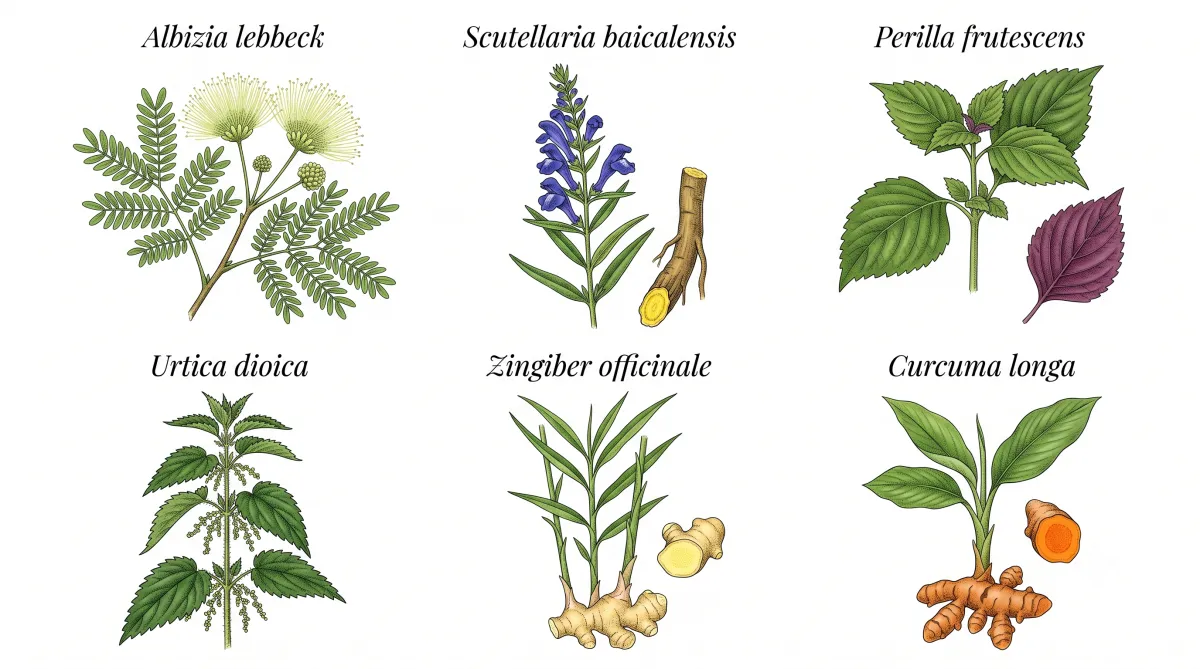
Albizia lebbeck is my first choice for allergic and mast cell presentations, and it has a long history in Ayurvedic practice for asthma and urticaria.
Baical skullcap (Scutellaria baicalensis) contains baicalein, which stabilises mast cells and supports liver clearance at the same time.
Perilla frutescens for upper respiratory symptoms, sinus congestion and eczema.
Nettle leaf taken as a strong infusion or a freeze-dried extract, and it is cheap, safe and worth trying early.
Ginger and turmeric for the gut motility and inflammatory side, which helps the SIBO contribution.
For the nervous system, which needs to be treated at the same time and not afterwards: withania( leave it out if nightshades are a problem for you), rhodiola, holy basil, lemon balm, passionflower, zizyphus and magnolia for the 2 to 4am waking, and licorice with rehmannia where the adrenal contribution is significant and blood pressure allows it.
Some of these interact with medications including blood thinners, thyroid medication, antidepressants and blood pressure medication, so this is prescribed rather than self-selected.
Nervous system strategies that lower mast cell activation
Extended exhale breathing. Four seconds in, six to eight seconds out, five minutes twice daily. The long exhale is what activates the vagus nerve and moves you out of sympathetic dominance.
Humming, gargling and singing. Direct vagal stimulation through the muscles of the throat, and it takes two minutes.
EFT tapping for the emotional load underneath, particularly where symptoms started after a period of prolonged stress or a traumatic event.
A consistent wake time and morning light within 30 minutes of waking, because circadian rhythm regulates both cortisol and mast cell reactivity across the day.
Protein at breakfast, around 30g, with meals spaced 4 to 5 hours apart.Blood sugar drops release adrenaline, and adrenaline activates mast cells.
Strength training over HIIT while you are flaring, and be careful with saunas, hot yoga and long hot showers, because heat is a direct degranulation trigger.
Alcohol reduction. It is the single biggest lever for most women, since it delivers histamine, liberates more, blocks DAO, and occupies the liver.
Address mould exposure. Water damage in a bathroom, a leaking roof, or a rental with a damp problem will hold you at a plateau however good the supplements are.
Functional testing, when clinically useful
I do not test everyone, and testing is only worth doing when the result changes what I prescribe. These are the tests I order, and what each one tells me.
Serum DAO and histamine. A blood test measuring how much of the DAO enzyme you are producing alongside how much histamine is circulating. Low DAO with high histamine tells me your clearance is the problem, and normal DAO with high histamine points to mast cells releasing too much in the first place. The treatment is different depending on which one it is.
Serum tryptase. Tryptase is an enzyme stored inside mast cells and released when they degranulate, so it works as a marker of mast cell activity rather than food histamine. I take a baseline reading when you are well and a second reading during a flare, because a rise between the two is what separates mast cell activation from a straightforward histamine intolerance.
Urinary N-methylhistamine and prostaglandin D2 metabolites. These are the breakdown products your body excretes in urine after histamine and other mast cell chemicals have been released. A blood test gives me one moment in time, and a 24-hour urine collection shows me what your mast cells have been doing all day, including overnight.
Comprehensive stool testing. This shows me which bacteria are living in your gut and what they are producing. I am looking for the species that manufacture histamine from the protein in your food, overall dysbiosis, beta-glucuronidase (an enzyme made by certain gut bacteria that sends oestrogen back into circulation instead of letting you excrete it), secretory IgA as a measure of gut immune function, and markers of inflammation in the intestinal wall. Since DAO is produced by the lining of the small intestine, the state of your gut sets the ceiling on how much histamine you can clear.
SIBO breath testing. SIBO is an overgrowth of bacteria in the small intestine, where there should be very few, and those bacteria both produce histamine and damage the lining that makes DAO. I test for it when you have bloating within 30 to 60 minutes of eating, a stomach that is flat in the morning and distended by evening, burping, reflux, alternating constipation and diarrhoea, or symptoms that get worse when you eat fibre, take probiotics, or eat fermented food. The test is done at home: you drink a lactulose or glucose solution and collect breath samples every 20 minutes for 2 to 3 hours, which measures the hydrogen and methane gases the bacteria produce.
DUTCH Complete. A dried urine test collected across four samples in one day. It measures oestrogen and progesterone, the metabolites your liver produces when it processes oestrogen (some of which are far more reactive than others), your cortisol curve across the day, and markers of methylation, which is the process HNMT relies on to clear histamine. It tells me whether your oestrogen is high because you are producing too much, because you are clearing too little, or both.
Mycotoxin urine testing. Mycotoxins are the toxic compounds produced by mould, and this test measures what you are excreting in your urine. Mould exposure is one of the strongest mast cell triggers there is, and it holds women at a plateau however well the rest of the treatment is going. I test when there has been visible mould, a musty smell, a leaking roof, shower or window, a flood, or symptoms that started after moving into a new house or office.
Nutrient and coeliac testing. Iron studies, B12, active folate, zinc, copper and vitamin D, because DAO needs B6, copper and vitamin C to function while HNMT needs B12, folate and magnesium, so a deficiency anywhere along that chain slows your clearance regardless of how careful you are with food. I also test coeliac serology, since coeliac disease damages the exact stretch of small intestine that produces DAO.
Where to start
If you recognised yourself in the symptom list, the sequence I use is the low histamine diet for 3 weeks as an assessment, gut and liver treatment alongside it, nervous system regulation from day one, and hormonal treatment once I know what your oestrogen and progesterone are doing. Most women feel considerably better within 6 to 12 weeks, and the goal is always a normal diet again, because a permanently restricted diet is its own problem.
I work with women worldwide through telehealth as a naturopath and nutritionist, and an initial consultation covers your full history, the symptoms you have stopped mentioning because nobody took them seriously, and a plan that treats the reason your histamine load is high rather than handing you a list of foods to avoid.You can find out more and book here
The Busy Women's Health Club is coming soon, and the meal plans and recipes inside it are built around a lower histamine way of eating, so if you want the food side handled for you without the cost of one-to-one care, that is where to look. Get on the waitlist and I will let you know the day it opens.
If you do nothing else after reading this, start with the storage rules in the meal plan above. Cooking fresh, freezing straight away, and cutting the three-day-old leftovers is free, it takes a week to know whether it makes a difference to you, and it tells you something useful either way.
